Manipulating TIME on the Comic Page!

Comics as a medium have a lot going for them. They often allow a single creator or very small team 100% creative control over the entirety of a universe. The only budget for how over-the-top a scene can be is how long an artist wants to spend on the page.
As comic creators, we have control over the nuance of every facial expression, casual lean or flexed muscle. We create the entire world with every background and we have characters that never have to age no matter how long it takes to tell their story. We have a LOT of control over this stuff.
But there are certain things we have much less control over. We can’t really control the voices you hear in your head when you are reading. We can’t control the speed of a punch or the sound of a crashing thunderbolt. And we can’t control how long a reader will look at any given drawing.
Time is mercurial. We can’t control it, but we can influence it. Using tools like spacing, pacing, composition and page design, we can nudge a reader to read a comic strip a little slower or faster. We can help a joke by adding a beat of TIME with a length of space. There are a lot of tools that can help you, as a creator, get a WEE SMIDGE of control over time.
Charles Schulz’s PEANUTS is often held up as a gold standard example of how to visually pace out a joke with open space. He would frequently use a 4-panel layout to add what has been often called the “silent 3rd panel”. A panel between the setup and the punchline where very little is actually happening.
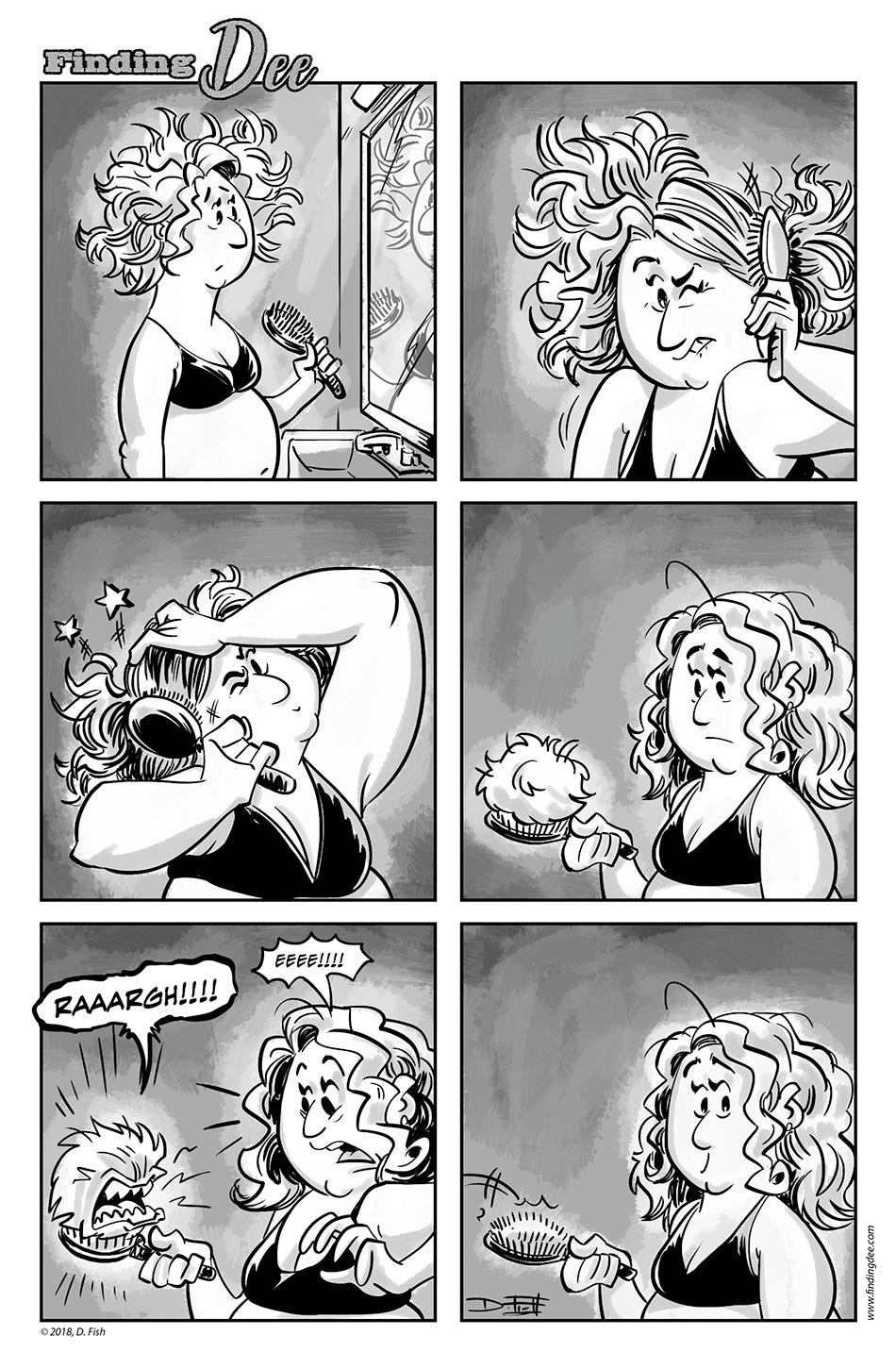
It’s usually just the characters standing there… thinking.
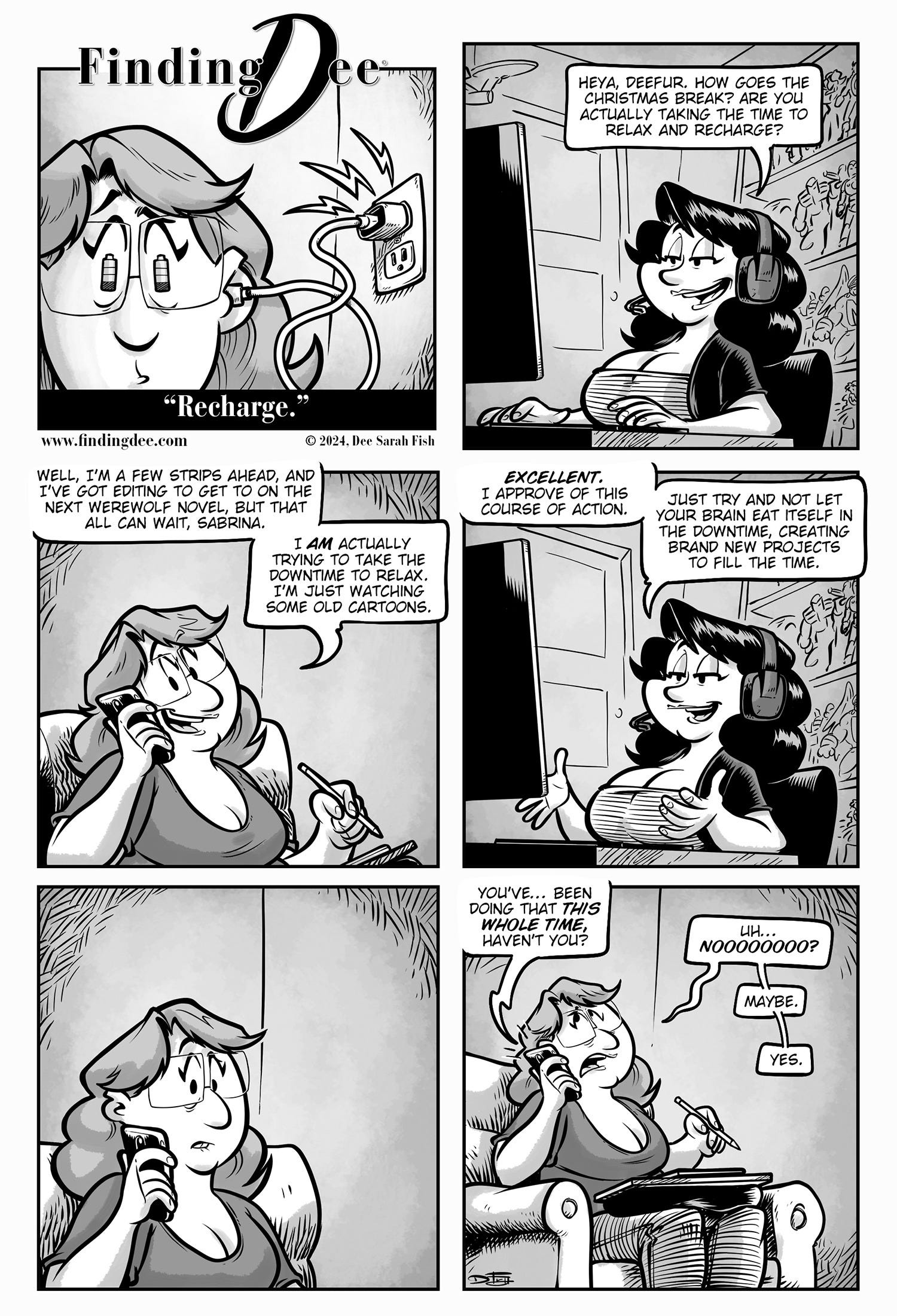
But it WORKS. Without it, the joke loses that moment of pause. That breath that might only take a second in time, but that allows the audience to anticipate the joke. In a Bugs Bunny cartoon, it can literally take a full second with Bugs pursing his lips and giving the camera side-eye. In COMICS, we don’t have time, so we can use SPACE.
We can also use this to punch up the INTENSITY of a punchline. A silent panel can frequently make a bombastic final image that much more powerful!
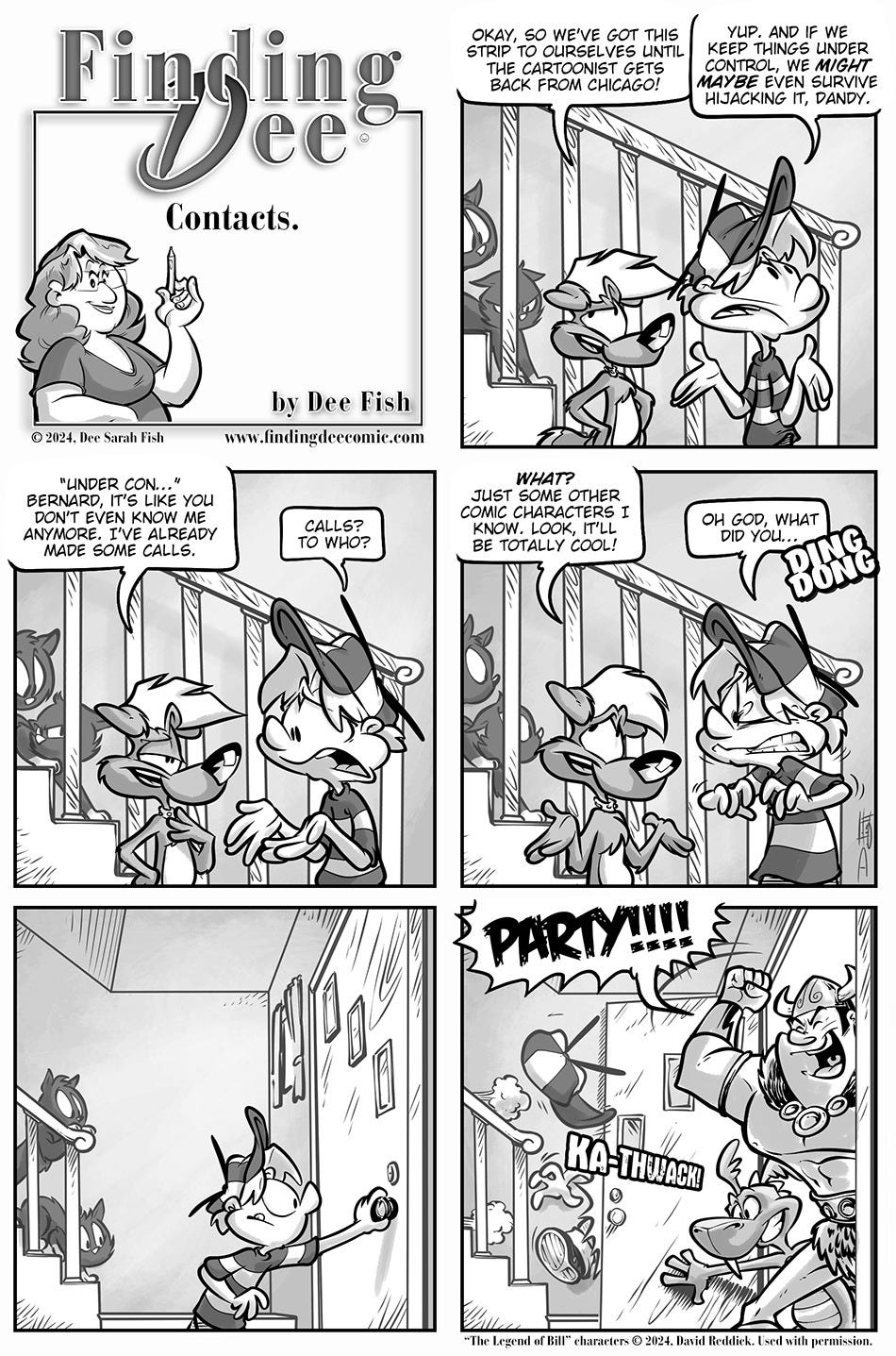
Sometimes, literal DISTANCE can help accomplish this as well. A longer panel than usual with a bit more dead space in it can inspire the eye to slow down and pass over it, taking that extra moment and embedding it in the art.
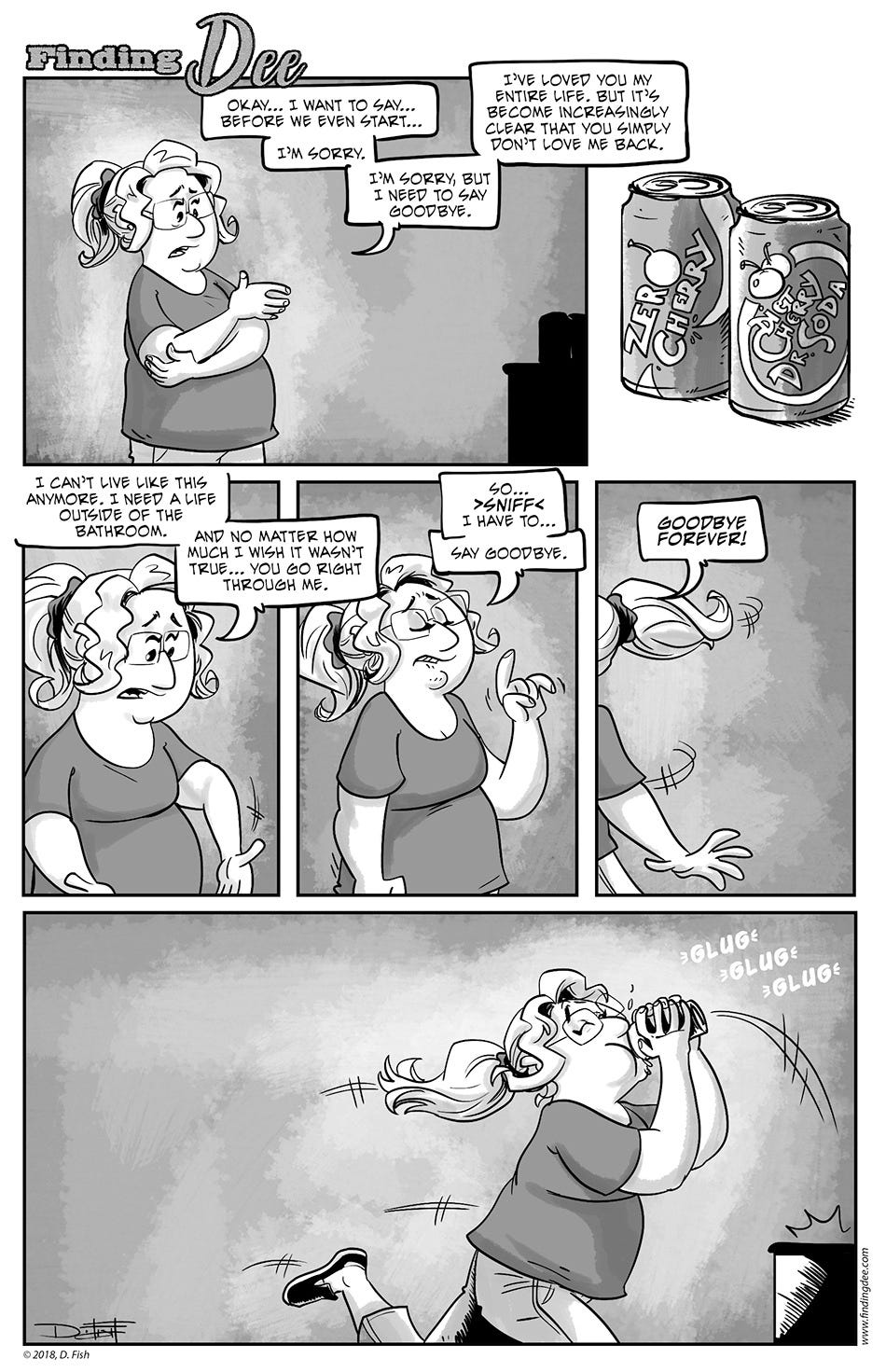
Another tool in the toolbox is to deconstruct the literal construction of the page itself. We use panel borders to separate each panel as a moment in time, distinct from the one before it and the one after it. OPENING a panel to be borderless can be a very effective way to slow the eye down and make the reader take an extra moment before rushing on to the next bit.
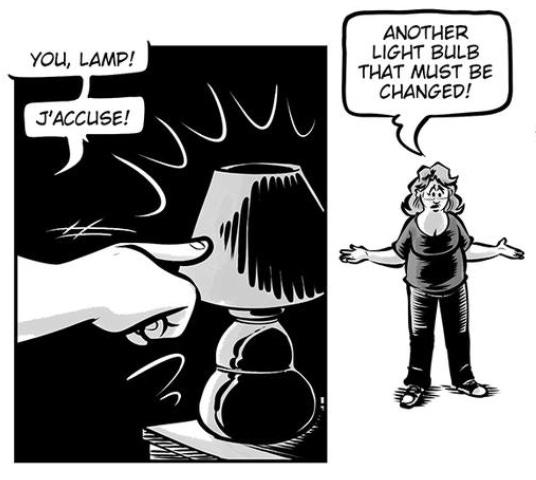
It can also be a great way to include the implication of a LOT of stuff happening in one panel. These multiple actions can’t even be CONTAINED by a panel border, opening up the sense of time considerably.
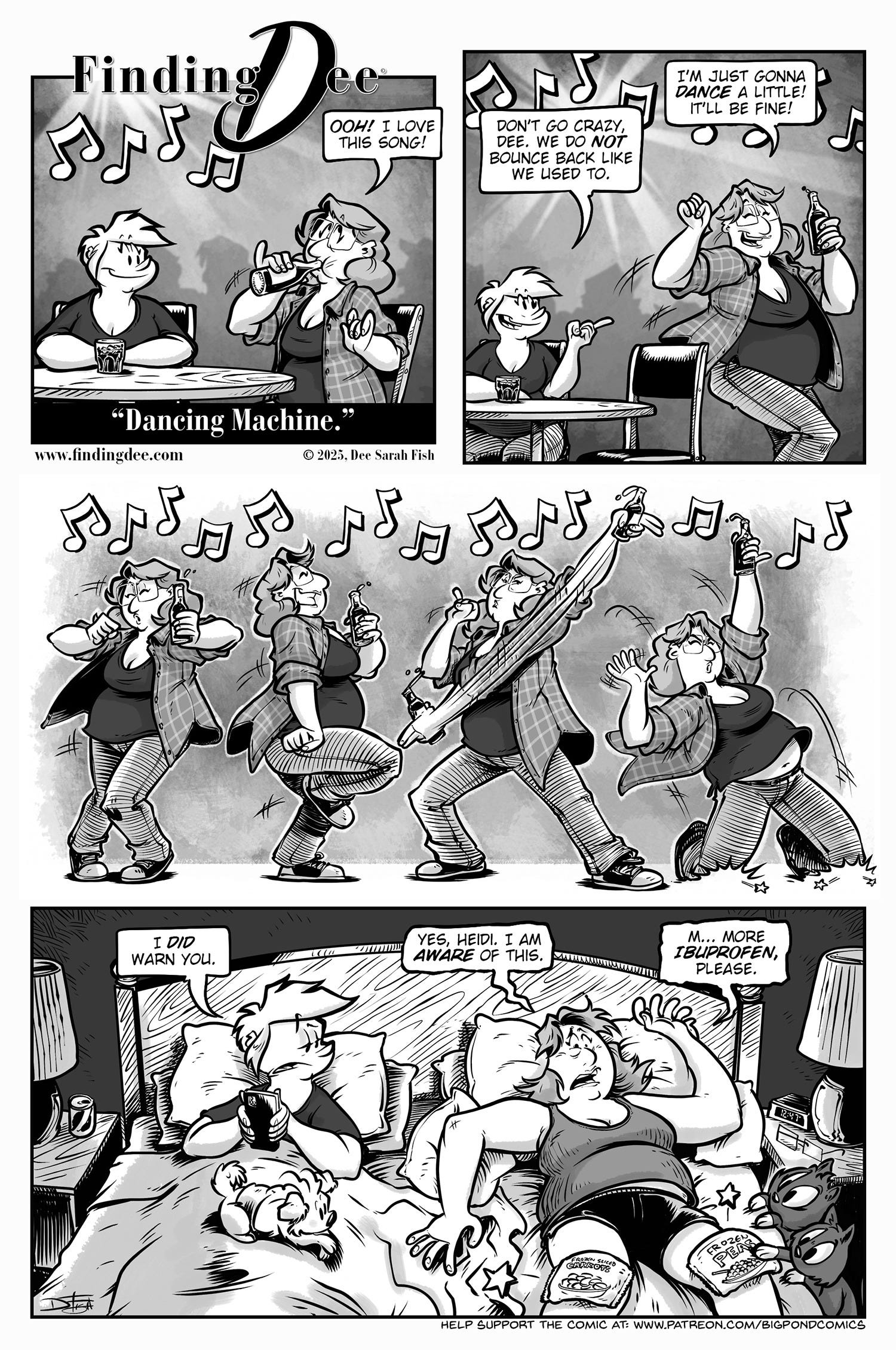
These are just a few ways we have to control pacing and the passage of time with visuals. What are some of YOUR favorite visual tricks to manipulate TIME on the page?
These are a wonderful cartooning curriculum you are laying out in these posts. Well done!
Thanks for such a great look at something that makes comics so unique! This was a lot of fun.